iPhone 16e & iPhone XR share many similarities, but there are also important differences, such as quality, performance, features, design, and connectivity. If you want the best one between them, I Would recommend the iPhone 16e rather than the iPhone XR. 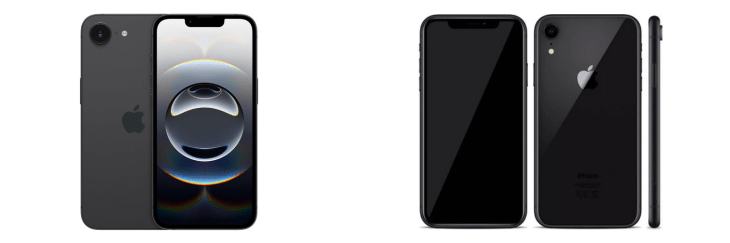
Why Do I Recommend The iPhone 16e?
- The iPhone 16e has an A17-based 3nm processor for faster performance, higher efficiency, and smoother multitasking, while the iPhone XR uses the older A12 Bionic 7nm chip.
- iPhone 16e features a 6.1-inch OLED Super Retina display with 120Hz refresh rate for sharper visuals and smoother scrolling, whereas the iPhone XR has a 6.1-inch LCD Liquid Retina display with only 60Hz refresh rate.
- It includes 48MP main camera with Night mode and advanced computational photography for clearer low-light shots, while the iPhone XR has a 12MP main camera without Night mode support.
- The iPhone 16e supports an ultra-wide camera to capture wider scenes and landscapes, whereas the iPhone XR is limited to a single wide camera.
- iPhone 16e comes with a 12MP front camera with 4K video recording and Night mode for sharper selfies and better video calls, while the iPhone XR has a 7MP front camera limited to 1080p video without Night mode.
- It supports 5G connectivity for faster downloads, streaming, and gaming, whereas the iPhone XR is restricted to 4G LTE speeds.
- The iPhone 16e has MagSafe and Qi2 wireless charging for more efficient and convenient charging, while the iPhone XR uses only standard Qi wireless charging.
- iPhone 16e features Ceramic Shield front glass for improved durability and drop resistance, compared to the iPhone XR’s standard glass construction.
Maybe the iPhone XR price can make you comfortable because it’s a little bit cheaper than the iPhone 16e. But you have to compromise all the above-mentioned features. Now the Decision is Yours. I hope it was helpful to choose the right one.
Side By Side Comparison
| Feature | iPhone 16e | iPhone XR |
| Chipset | A17-based 3nm chip | A12 Bionic 7nm chip |
| CPU | Hexa-core with higher clock speed | Hexa-core older architecture |
| GPU | Hardware ray tracing support | Standard 4-core GPU |
| RAM | 6GB | 3GB |
| Storage Variants | 128GB, 256GB, 512GB | 64GB, 128GB, 256GB |
| Display Type | OLED Super Retina | LCD Liquid Retina |
| Refresh Rate | 120Hz ProMotion | 60Hz |
| Peak Brightness | Around 1600 nits HDR | Around 625 nits |
| Resolution | Higher pixel density | Lower pixel density |
| Bezels | Slimmer modern bezels | Thicker bezels |
| Main Camera | 48MP wide sensor | 12MP wide sensor |
| Ultra-Wide Camera | Present | Absent |
| Night Mode | Supported | Not supported |
| Video Features | 4K60, Cinematic, ProRes | 4K60 basic modes |
| Front Camera | 12MP with 4K | 7MP with 1080p |
| Face ID | Improved faster recognition | 1st generation Face ID |
| Battery Life | Longer lasting | Shorter runtime |
| Charging | MagSafe + Qi2 + fast wired | Qi wireless + standard wired |
| Connectivity | 5G supported | 4G LTE only |
| Wi-Fi Standard | Wi-Fi 6E | Wi-Fi 5 |
| Bluetooth Version | 5.3 | 5.0 |
| Operating System at Launch | iOS 18 | iOS 12 |
| Software Support | 5–6 more years | Near end of updates |
| Build Protection | Ceramic Shield glass | Standard strengthened glass |
| Weight | Lighter design | Heavier design |
| Price | Check iPhone 16e Price | Check iPhone XR Price |
What Common Both Can Do?
- Brand Identity: Both iPhone 16e and iPhone XR belong to Apple’s iPhone family, maintaining the same ecosystem and design philosophy.
- Operating System: Both run on iOS, meaning users get Apple’s smooth interface, privacy controls, and consistent updates, though the XR has aged.
- Build Material: Each device uses a combination of aluminum frame and glass back, balancing durability with a premium feel.
- Biometric Security: Both models rely on Face ID, allowing secure unlocking and authentication without the need for fingerprints.
- Water & Dust Resistance: Each phone is built with splash and dust resistance, making them safe for daily accidental exposure.
- Wireless Charging: Both devices support Qi-based wireless charging, enabling cable-free convenience.
- Haptic Feedback: Each phone includes the Taptic Engine, giving subtle vibration responses that enhance typing and navigation.
- App Store: Both iPhones provide full access to the App Store, ensuring the same ecosystem of apps and services.
- iMessage & FaceTime: Both models include Apple’s signature communication tools for secure messaging and high-quality video calls.
- Siri Integration: Both iPhones have Siri, Apple’s voice assistant, for hands-free control and productivity.
- Dual SIM Support: Both support Nano SIM and eSIM, giving users more flexibility in managing carriers.
- Portrait Mode: Both devices are capable of taking portrait shots with background blur, enhancing photography for portraits.
- Video Stabilization: Each model includes stabilization technology to reduce shake and improve video quality.
- Wireless Audio: Both iPhones work seamlessly with AirPods and Beats, supporting Apple’s wireless audio ecosystem.
- Apple Pay: Each device has NFC functionality to make quick and secure contactless payments with Apple Pay.
- Accessibility Features: Both support Apple’s accessibility tools like VoiceOver and Magnifier, ensuring inclusivity for users with special needs.
Common Features
| Feature | iPhone 16e | iPhone XR |
| Brand | Apple iPhone lineup | Apple iPhone lineup |
| Operating System | iOS platform | iOS platform |
| Build Material | Glass front and back with aluminum frame | Glass front and back with aluminum frame |
| Biometric Security | Face ID recognition | Face ID recognition |
| Water & Dust Resistance | Rated for splash and dust protection | Rated for splash and dust protection |
| Wireless Charging | Supports wireless charging | Supports wireless charging |
| Lightning to USB-C Transition | Transition phase with USB-C or Lightning | Lightning port |
| Haptic Feedback | Taptic Engine for precise vibration | Taptic Engine for precise vibration |
| App Store | Access to Apple App Store ecosystem | Access to Apple App Store ecosystem |
| iMessage & FaceTime | Fully integrated Apple services | Fully integrated Apple services |
| Siri | Voice assistant built-in | Voice assistant built-in |
| Dual SIM Support | Nano SIM + eSIM | Nano SIM + eSIM |
| Portrait Mode | Portrait photography available | Portrait photography available |
| Video Stabilization | Optical and digital stabilization | Optical and digital stabilization |
| Wireless Audio | AirPods and Beats compatibility | AirPods and Beats compatibility |
| Apple Pay | Contactless payment support | Contactless payment support |
| Accessibility Features | VoiceOver, Magnifier, Hearing Aid support | VoiceOver, Magnifier, Hearing Aid support |
| Price | Check iPhone 16e Price | Check iPhone XR Price |
FAQ
What is the release difference between iPhone 16e and iPhone XR? Which phone has the better performance, iPhone 16e or iPhone XR? Do both iPhone 16e and iPhone XR run on iOS? Which device has the better display quality? How do the cameras compare on iPhone 16e vs iPhone XR? Is there a difference in front-facing camera quality? Which phone has better video recording capabilities? Do both iPhone 16e and iPhone XR support Face ID? Which iPhone has longer battery life? What are the charging differences between iPhone 16e and iPhone XR? Do both iPhone 16e and iPhone XR support 5G connectivity? Which phone has the better durability in build quality? How do Wi-Fi and Bluetooth compare on these devices? What storage options are available on iPhone 16e and iPhone XR? Which iPhone is better for long-term use? |