Quick Deal Access

Skylight Calendar 15 vs 27 – Check Which One Is Best & Why?

Skylight Calendar 27 & Skylight Calendar 15 share many similarities, but there are also important differences, such as quality, performance, features, design, and connectivity. If you want the best one between them, I Would recommend the Skylight Calendar 27 rather than the Skylight Calendar 15.
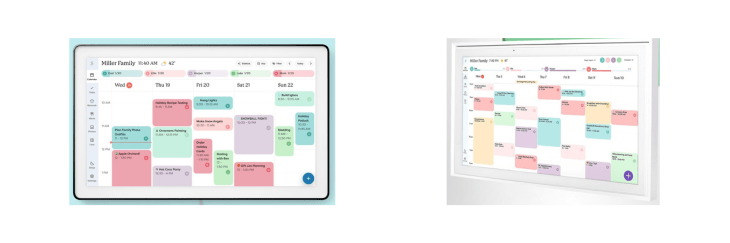
Why Do I Recommend The Skylight Calendar 27?

  • The Skylight Calendar 27 has a 27-inch display for clear visibility of multiple schedules from across large rooms, while the Skylight Calendar 15 uses a smaller 15-inch display.
  • Skylight Calendar 27 features a wider 16:9 aspect ratio to display more calendar columns side by side in weekly views, whereas the Skylight Calendar 15 uses a 4:3 aspect ratio with fewer simultaneous columns.
  • It comes with a larger on-screen event density for viewing busy family schedules without scrolling, while the Skylight Calendar 15 shows fewer events per screen.
  • The Skylight Calendar 27 has larger default text scaling to keep events readable at a distance in shared spaces, whereas the Skylight Calendar 15 uses smaller text optimized for close viewing.
  • Skylight Calendar 27 includes larger touch targets to improve accuracy when interacting from standing positions, while the Skylight Calendar 15 uses smaller touch zones suited to closer interaction.
  • It supports expanded monthly grid visibility to review long-term plans at a glance, while the Skylight Calendar 15 displays a more compact monthly layout.
  • The Skylight Calendar 27 comes with a more prominent wall presence to function as a central household information hub, whereas the Skylight Calendar 15 blends more subtly into smaller rooms.
  • Skylight Calendar 27 supports better across-room readability for large households managing many overlapping events, while the Skylight Calendar 15 is designed for smaller households with lighter scheduling needs.

Maybe the Skylight Calendar 15 can make you comfortable because it’s a little bit cheaper than the Skylight Calendar 27. But you have to compromise all the above-mentioned features. Now the Decision is Yours. I hope it was helpful to choose the right one.

Side-by-Side Comparison

FeatureSkylight Calendar 27Skylight Calendar 15
Screen size27-inch15-inch
Aspect ratio16:94:3
Physical footprintLargerSmaller
Wall space requiredMoreLess
Weight classHeavierLighter
Mounting requirementStronger mountStandard mount
Viewing distanceLongerShorter
On-screen event densityHigherLower
Weekly view capacityMore items visibleFewer items visible
Monthly grid legibilityLarger cellsSmaller cells
Text size at default zoomLargerSmaller
Touch target sizeLargerSmaller
Readability across roomBetterLimited
Room suitabilityLarge roomsSmall–medium rooms
Household size fitLarger familiesSmaller families
UI scaling rangeWiderNarrower
Package sizeOversizedStandard
Power draw classHigherLower
PriceCheck Skylight Calendar 27 PriceCheck Skylight Calendar 15 Price

What Common Both Can Do?

  • Touchscreen interface: Both models use a responsive touchscreen that allows users to tap, scroll, and interact directly with schedules. This makes quick edits and navigation intuitive for all family members.
  • Wall-mounted design: Each calendar is designed to be mounted on a wall rather than placed on a desk or counter. This keeps schedules visible to everyone and prevents the device from being moved around or misplaced.
  • Digital family calendar: Both devices function as centralized family calendars where all household schedules are combined. This helps reduce conflicts and ensures everyone stays aligned.
  • Cloud-based syncing: Each model relies on cloud syncing to keep calendars updated across devices. Changes made on a phone or computer appear on the display automatically.
  • Multi-calendar support: Both calendars can pull data from multiple individual calendars at once. This allows parents, kids, and shared calendars to coexist in a single view.
  • Google Calendar sync: Each model supports direct syncing with Google Calendar. This ensures compatibility with one of the most widely used calendar platforms.
  • iCloud Calendar sync: Both devices integrate with Apple iCloud calendars. This is important for households using iPhones, iPads, or Macs.
  • Outlook Calendar sync: Each model supports Microsoft Outlook calendars. This makes them suitable for users managing work and personal schedules together.
  • Real-time updates: Events update in near real time on both devices when changes are made. This prevents outdated information from being displayed.
  • Shared family access: Both calendars allow multiple family members to view the same schedule. This shared access improves coordination and accountability.
  • Color-coded events: Each model supports color-coded events for different people or calendar types. This makes it easier to distinguish schedules at a glance.
  • Daily view: Both devices include a daily agenda view. This helps users focus on immediate tasks and appointments.
  • Weekly view: Each calendar provides a weekly overview of events. This view is useful for planning school, work, and activities across several days.
  • Monthly view: Both models support a monthly grid layout. This allows users to see long-term plans and upcoming busy periods.
  • Portrait or landscape mounting: Each device can be mounted in either orientation. This flexibility helps match different wall spaces and room layouts.
  • Wi-Fi connectivity: Both calendars rely on Wi-Fi for syncing and updates. A continuous connection ensures accurate scheduling information.
  • Automatic time/date sync: Each model automatically updates time and date settings. This removes the need for manual adjustments.
  • Always-on display mode: Both devices are designed to stay on continuously. This ensures the calendar is always visible without waking the screen.
  • No camera: Neither model includes a camera. This helps maintain privacy in shared household spaces.
  • No microphone: Both calendars lack microphones. This further reinforces privacy and keeps the device focused solely on scheduling.

Common Features

FeatureSkylight Calendar 27Skylight Calendar 15
Touchscreen interfaceYesYes
Wall-mounted designYesYes
Digital family calendarYesYes
Cloud-based syncingYesYes
Multi-calendar supportYesYes
Google Calendar syncYesYes
iCloud Calendar syncYesYes
Outlook Calendar syncYesYes
Real-time updatesYesYes
Shared family accessYesYes
Color-coded eventsYesYes
Daily viewYesYes
Weekly viewYesYes
Monthly viewYesYes
Portrait or landscape mountingYesYes
Wi-Fi connectivityYesYes
Automatic time/date syncYesYes
Always-on display modeYesYes
No cameraYesYes
No microphoneYesYes
Price Check Skylight Calendar 27 Price
Check Skylight Calendar 15 Price

FAQ

Do both Skylight calendars support the same calendar services?
Yes, both models support syncing with Google Calendar, iCloud Calendar, and Microsoft Outlook, allowing users to manage personal and work schedules in one place.

Can multiple family members use both calendars at the same time?
Both devices support shared family access, meaning multiple calendars can be displayed together so everyone in the household can see and follow the same schedule.

Do the Skylight Calendar 27 and 15 require a subscription to work?
Both calendars function without a mandatory subscription for basic calendar display, but optional subscription features unlock additional customization and advanced tools.

Are both models designed to stay on all the time?
Yes, both devices are built with an always-on display concept so schedules remain visible throughout the day without needing to wake the screen.

Is there any difference in software features between the two models?
No, both models run the same Skylight software and user interface, meaning features, updates, and functionality are consistent across both sizes.

Can both calendars be mounted vertically or horizontally?
Yes, both models support portrait and landscape mounting, giving flexibility to fit different wall spaces and room layouts.

Do either of the Skylight calendars include a camera or microphone?
Neither model includes a camera or microphone, which helps maintain privacy in shared household environments.

Is Wi-Fi required for both devices to function?
Yes, both calendars rely on Wi-Fi connectivity to sync events, update schedules, and maintain accurate time and date information.

Can events be color-coded on both calendars?
Both models support color-coded events, making it easier to distinguish between family members, work schedules, and personal activities.

Do both calendars support daily, weekly, and monthly views?
Yes, each model includes daily, weekly, and monthly views so users can switch between short-term planning and long-term scheduling.

Are reminders and updates synced in real time on both models?
Both calendars update in near real time when changes are made through connected calendar services, helping prevent missed or outdated events.

Can both Skylight calendars replace a traditional paper family calendar?
Yes, both devices are designed specifically to replace paper calendars by centralizing schedules digitally and keeping them automatically updated.

Is setup similar for the Skylight Calendar 27 and 15?
Yes, initial setup is nearly identical for both models, involving Wi-Fi connection, account login, and calendar syncing through the Skylight app.

Which Skylight calendar is better for a large household?
Both work functionally the same, but larger households often prefer the Skylight Calendar 27 because its larger screen makes multiple schedules easier to see at a distance.

Scroll to Top