Oura Ring 4 & RingConn Gen 2 share many similarities, but there are also important differences, such as quality, performance, features, design, and connectivity. If you want the best one between them, I Would recommend the Oura Ring 4 rather than the RingConn Gen 2.
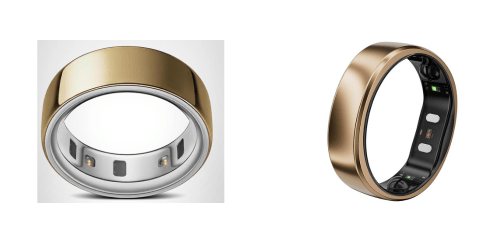
Why Do I Recommend The Oura Ring 4?
- The Oura Ring 4 has a comprehensive Readiness Score for delivering a clear daily recovery assessment that helps users plan training, work intensity, and rest more accurately, while RingConn Gen 2 uses a more general wellness scoring system.
- Oura Ring 4 features advanced HRV trend analysis for identifying subtle changes in stress and recovery across multiple days, whereas RingConn Gen 2 uses more basic HRV summaries with less longitudinal context.
- It includes deeper sleep-stage analytics for understanding how REM, deep, and light sleep quality affect next-day energy and cognitive performance, while RingConn Gen 2 provides simpler sleep-stage breakdowns.
- The Oura Ring 4 supports a larger ecosystem of third-party app integrations for syncing health data into broader fitness and wellness platforms, whereas RingConn Gen 2 has more limited integration support.
- Oura Ring 4 comes with more refined temperature baseline modeling for detecting early signs of illness, overtraining, or hormonal changes, while RingConn Gen 2 presents temperature trends with less personalized baseline adjustment.
- It features more frequent firmware updates for improving algorithms and adding new health insights over time, whereas RingConn Gen 2 receives updates less often.
- The Oura Ring 4 includes richer in-app guidance and contextual insights to understand why specific scores changed and how to respond, while RingConn Gen 2 provides more minimal explanatory feedback.
- Oura Ring 4 has a more mature and analytics-dense mobile app for detailed health data exploration and long-term trend analysis, while the RingConn Gen 2 app focuses on simpler dashboards and summaries.
Maybe the RingConn Gen 2 can make you comfortable because it’s a little bit cheaper than the Oura Ring 4. But you have to compromise all the above-mentioned features. Now the Decision is Yours. I hope it was helpful to choose the right one.
Side-by-Side Comparison
| Feature | Oura Ring 4 | RingConn Gen 2 |
| Subscription required | Yes | No |
| Battery life (claimed) | Shorter | Longer |
| Charging dock style | Puck-style charger | Cradle-style charger |
| Ring finishes | More finish options | Fewer finish options |
| SpO2 metric name | SpO2 | Blood oxygen |
| HRV focus | Readiness-centric | Wellness-centric |
| Temperature metric | Baseline deviation | Trend |
| Readiness score | Yes | Different score system |
| Stress feature label | “Stress” / “Daytime Stress” | Different stress label |
| Sleep staging algorithm | Oura sleep staging | RingConn sleep staging |
| Integrations | More platforms | Fewer platforms |
| App UX | Analytics-dense | Simpler dashboards |
| Price | Check Oura Ring 4 Price | Check RingConn Gen 2 Price |
What Common Both Can Do?
- Form factor: Both devices use a compact smart ring design that fits on the finger instead of the wrist. This allows continuous health tracking with minimal disruption to daily activities and sleep.
- 24/7 heart rate tracking: Each ring monitors heart rate throughout the day and night. Continuous tracking helps users understand baseline cardiovascular patterns and changes over time.
- Nighttime heart rate: Both models emphasize heart rate measurement during sleep. Nighttime data is important because it reflects resting physiology without daytime activity interference.
- Heart rate variability (HRV): Oura Ring 4 and RingConn Gen 2 track HRV as a key recovery and stress indicator. HRV trends help users gauge nervous system balance and overall readiness.
- Sleep tracking: Both rings automatically track sleep without requiring manual activation. This ensures consistent nightly data collection for long-term sleep analysis.
- Sleep stages: Each device differentiates between deep, light, and REM sleep stages. Understanding sleep composition helps users evaluate sleep quality, not just total duration.
- Sleep score: Both provide a summarized sleep score derived from multiple sleep metrics. A single score makes it easier to interpret complex sleep data at a glance.
- Blood oxygen (SpO2): Both rings measure blood oxygen levels during sleep. SpO2 data can highlight breathing irregularities and general respiratory health trends.
- Skin temperature tracking: Each device tracks changes in skin temperature relative to a personal baseline. Temperature variation can signal recovery status, illness, or hormonal changes.
- Respiratory rate: Both monitor breathing rate during sleep. This metric supports sleep quality analysis and can indicate stress or health changes.
- Activity tracking: Oura Ring 4 and RingConn Gen 2 both record daily movement and activity levels. Activity tracking helps balance exertion with rest and recovery.
- Automatic activity detection: Each ring can automatically recognize certain activities. This reduces the need for manual input and improves data completeness.
- Step counting: Both include step counting as a basic daily movement metric. Steps provide a simple, widely understood indicator of overall activity.
- Stress-related insights: Each platform surfaces stress-related metrics derived from physiological signals. These insights help users understand how lifestyle and workload affect their bodies.
- Recovery insights: Both devices translate health data into recovery-oriented feedback. Recovery insights support better training decisions and daily planning.
- Women’s health tracking: Oura Ring 4 and RingConn Gen 2 both support menstrual cycle–related tracking. This helps users recognize patterns and anticipate physiological changes.
- Water resistance: Both rings are water resistant for everyday use. This allows continuous wear during handwashing, showers, and light water activities.
- Rechargeable battery: Each device uses a built-in rechargeable battery. Regular recharging supports long-term use without disposable components.
- iOS compatibility: Both rings support iOS through dedicated mobile apps. This ensures seamless syncing and data access for iPhone users.
- Android compatibility: Each device also supports Android smartphones. Cross-platform compatibility makes both rings accessible to a wide user base.
- App-based data access: All health data for both products is accessed through companion apps. Centralized app dashboards make it easier to review trends and insights over time.
Common Features
| Feature | Oura Ring 4 | RingConn Gen 2 |
| Form factor | Smart ring | Smart ring |
| 24/7 heart rate tracking | Yes | Yes |
| Nighttime heart rate | Yes | Yes |
| Heart rate variability (HRV) | Yes | Yes |
| Sleep tracking | Yes | Yes |
| Sleep stages | Deep / Light / REM | Deep / Light / REM |
| Sleep score | Yes | Yes |
| Blood oxygen (SpO2) | Yes | Yes |
| Skin temperature tracking | Yes | Yes |
| Respiratory rate | Yes | Yes |
| Activity tracking | Yes | Yes |
| Automatic activity detection | Yes | Yes |
| Step counting | Yes | Yes |
| Stress-related insights | Yes | Yes |
| Recovery insights | Yes | Yes |
| Women’s health tracking | Yes | Yes |
| Water resistance | Yes | Yes |
| Rechargeable battery | Yes | Yes |
| iOS compatibility | Yes | Yes |
| Android compatibility | Yes | Yes |
| App-based data access | Yes | Yes |
| Price | Check Oura Ring 4 Price | Check RingConn Gen 2 Price |
FAQ
What are Oura Ring 4 and RingConn Gen 2 designed for? Do both rings track sleep automatically? Can both rings measure heart rate throughout the day and night? Do both Oura Ring 4 and RingConn Gen 2 support HRV tracking? Is blood oxygen (SpO2) monitoring available on both rings? Do both rings track skin temperature changes? Are the rings water resistant for daily use? Do they work with both iOS and Android phones? Do both rings track daily activity and steps? Is automatic activity detection supported on both devices? Do both platforms provide recovery-related insights? Are women’s health features included on both rings? Do the rings require frequent charging? Is all data accessed through a mobile app? Are these rings intended to replace smartwatches? |