Oura Ring 4 & Ultrahuman share many similarities, but there are also important differences, such as quality, performance, features, design, and connectivity. If you want the best one between them, I Would recommend the Oura Ring 4 rather than the Ultrahuman.
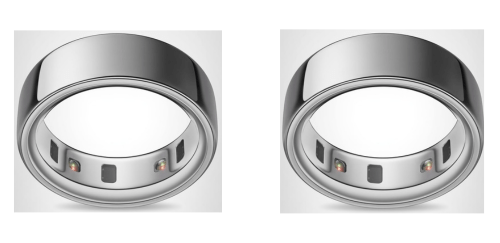
Why Do I Recommend The Oura Ring 4?
- The Oura Ring 4 has advanced sleep stage detection for more accurate identification of deep, REM, and light sleep patterns that support better recovery planning, while Ultrahuman Ring Air uses a more generalized sleep stage model.
- Oura Ring 4 features a long-established Readiness Score for clearer daily recovery guidance based on sleep, HRV, and resting heart rate trends, whereas the Ultrahuman Ring Air relies on multiple performance indices that require more interpretation.
- It includes deeper women’s health and cycle tracking for more precise fertility and cycle insights driven by temperature trends, while the Ultrahuman Ring Air provides more basic cycle tracking features.
- The Oura Ring 4 has longer typical battery life of around seven days to reduce charging frequency and improve uninterrupted tracking, while the Ultrahuman Ring Air has a shorter multi-day battery window.
- Oura Ring 4 supports a more mature sleep-centric coaching system for clearer guidance on rest timing, consistency, and recovery habits, whereas the Ultrahuman Ring Air focuses more heavily on performance and metabolic coaching.
- It uses nighttime-optimized HRV analysis for more stable recovery baselines and reduced noise from daytime activity, while the Ultrahuman Ring Air emphasizes broader all-day HRV variability.
- The Oura Ring 4 comes with a more minimal and wellness-focused app interface for easier understanding of long-term health trends, while the Ultrahuman Ring Air presents denser performance-oriented data.
- Oura Ring 4 features a premium lifestyle-oriented design for comfortable all-day and overnight wear in non-athletic settings, whereas the Ultrahuman Ring Air prioritizes a sport-leaning, performance-focused design.
Maybe the Ultrahuman price can make you comfortable because it’s a little bit cheaper than the Oura Ring 4. But you have to compromise all the above-mentioned features. Now the Decision is Yours. I hope it was helpful to choose the right one.
Side By Side Comparison
| Feature | Oura Ring 4 | Ultrahuman |
| Core focus | Sleep & recovery | Metabolic & performance |
| Subscription | Required | Not required |
| Subscription model | Monthly | None |
| Readiness metric | Readiness Score | Recovery Index |
| Sleep emphasis | Primary | Secondary |
| Workout orientation | Lifestyle | Performance |
| Temperature usage | Health trends | Metabolic trends |
| Women’s health depth | Advanced | Basic |
| Coaching style | Wellness-based | Habit & performance-based |
| App data density | Minimal | High |
| Battery life range | ~7 days | ~4–6 days |
| Ring thickness | Thicker | Thinner |
| Ring weight | Heavier | Lighter |
| Material emphasis | Premium finish | Lightweight titanium |
| Price | Check Oura Price | Check Ultrahuman Price |
What Common Both Can Do?
- Form factor: Both devices are designed as compact smart rings, allowing continuous health tracking without the bulk of a smartwatch. This makes them suitable for users who prefer discreet wearables.
- 24/7 wear: Both rings are built for round-the-clock use, enabling uninterrupted data collection across sleep, activity, and recovery. Continuous wear improves the accuracy of long-term health trends.
- Heart rate tracking: Each ring monitors heart rate throughout the day and night. This data supports activity tracking, recovery analysis, and general cardiovascular awareness.
- Heart rate variability: Both devices track HRV as a key recovery and stress indicator. HRV helps users understand how their body responds to training, sleep, and daily stressors.
- Sleep tracking: Both rings automatically track sleep without user input. This allows consistent monitoring of sleep quality and duration over time.
- Sleep stages: Each device breaks sleep into stages such as light, deep, and REM sleep. Understanding sleep stages helps users identify sleep quality patterns and recovery effectiveness.
- Blood oxygen (SpO₂): Both rings measure blood oxygen levels during sleep. SpO₂ tracking can highlight breathing irregularities and overall nighttime respiratory health.
- Skin temperature sensing: Each ring tracks skin temperature deviations rather than absolute temperature. These trends help identify changes related to recovery, illness, or physiological stress.
- Activity tracking: Both devices track daily movement and general activity levels. This ensures users can monitor how active they are without relying on a screen-based wearable.
- Recovery insights: Both platforms translate raw biometric data into recovery-related insights. This helps users balance activity and rest more effectively.
- Stress indicators: Each ring provides stress-related signals derived from heart rate and HRV patterns. These indicators help users recognize periods of physical or mental strain.
- Mobile app support: Both rely on companion mobile apps for data visualization and insights. The app experience is central to interpreting health metrics.
- iOS compatibility: Both rings support iOS devices, ensuring access for iPhone users. This allows seamless syncing and notifications within the Apple ecosystem.
- Android compatibility: Each ring also supports Android devices. Cross-platform compatibility makes them accessible to a wider user base.
- Wireless charging: Both devices charge wirelessly using dedicated chargers. This improves durability by removing exposed charging ports.
- Water resistance: Both rings are water-resistant and suitable for daily wear, including hand washing and showers. This supports uninterrupted tracking.
- Lightweight design: Each ring is designed to remain lightweight for comfort during sleep and all-day wear. Comfort is critical for long-term adherence.
- No display: Neither device includes a screen. This design choice prioritizes battery efficiency and encourages users to focus on long-term trends rather than constant checking.
- Automatic data sync: Both rings automatically sync collected data to their apps. This ensures health metrics are always up to date without manual intervention.
Common Features
| Feature | Oura Ring 4 | Ultrahuman |
| Form factor | Smart ring | Smart ring |
| 24/7 wear | Yes | Yes |
| Heart rate tracking | Yes | Yes |
| Heart rate variability | Yes | Yes |
| Sleep tracking | Yes | Yes |
| Sleep stages | Yes | Yes |
| Blood oxygen (SpO₂) | Yes | Yes |
| Skin temperature sensing | Yes | Yes |
| Activity tracking | Yes | Yes |
| Recovery insights | Yes | Yes |
| Stress indicators | Yes | Yes |
| Mobile app support | Yes | Yes |
| iOS compatibility | Yes | Yes |
| Android compatibility | Yes | Yes |
| Wireless charging | Yes | Yes |
| Water resistance | Yes | Yes |
| Lightweight design | Yes | Yes |
| No display | Yes | Yes |
| Automatic data sync | Yes | Yes |
| Price | Check Oura Price | Check Ultrahuman Price |