Garmin HRM-Pro & Polar H10 share many similarities, but there are also important differences, such as quality, performance, features, design, and connectivity. If you want the best one between them, I Would recommend the Garmin HRM-Pro rather than the Polar H10.
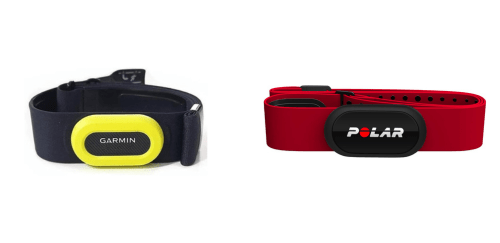
Why Do I Recommend The Garmin HRM-Pro?
- The Garmin HRM-Pro features Running Dynamics for detailed metrics like vertical oscillation and ground contact time that help runners refine form and efficiency, while the Polar H10 uses standard heart-rate tracking without running dynamics.
- Garmin HRM-Pro supports strap-based pace and distance to accurately record speed and distance during indoor runs or GPS-restricted environments, whereas the Polar H10 relies on connected devices for pace and distance data.
- It comes with native Garmin Running Power support to analyze effort and load directly within compatible Garmin watches, while the Polar H10 does not integrate with Garmin running power metrics.
- The Garmin HRM-Pro includes automatic activity upload to Garmin Connect for seamless post-workout syncing without manual file handling, while the Polar H10 uses Polar Flow or app-based sync workflows.
- Garmin HRM-Pro supports treadmill pace and distance calibration with Garmin watches to improve indoor running accuracy over time, whereas the Polar H10 does not provide strap-based treadmill pace or distance features.
- It features integrated onboard storage optimized for Garmin multisport workflows to ensure workouts are captured and synced consistently, while the Polar H10 uses more generic session memory handling.
- The Garmin HRM-Pro supports multisport use across running, cycling, and triathlon within the Garmin ecosystem for unified training analysis and performance tracking, while the Polar H10 focuses primarily on cross-platform heart-rate data.
- Garmin HRM-Pro comes with an integrated strap-sensor design to reduce connection points and simplify wear during high-movement activities, whereas the Polar H10 uses a detachable sensor pod and strap system.
Maybe the Polar H10 can make you comfortable because it’s a little bit cheaper than the Garmin HRM-Pro. But you have to compromise all the above-mentioned features. Now the Decision is Yours. I hope it was helpful to choose the right one.
Side-by-Side Comparison
| Feature | Garmin HRM-Pro | Polar H10 |
| Brand ecosystem | Garmin Connect | Polar Flow |
| Primary add-on metrics | Running Dynamics | RR / HRV-oriented use |
| Running Dynamics | Yes | No |
| Pace & distance (strap-based, compatible use) | Yes | No |
| Memory sync target | Garmin Connect | Polar Beat / Polar Flow |
| Sensor module design | Integrated | Detachable pod |
| Typical 3rd-party focus | Garmin devices | Broad apps/devices |
| Firmware updates | Garmin ecosystem | Polar ecosystem |
| Use with Garmin Running Power features | Yes | No |
| Activity types emphasized | Running-centric | Multi-app HR-centric |
| Treadmill pace/distance features | Garmin-compatible | No |
| Data export pathway | Garmin Connect | Polar Flow/Beat exports |
| Price | Check HRM-Pro Price | Check Polar H10 Price |
What Common Both Can Do?
- Chest-strap heart-rate sensor: Both products use a chest-mounted design that places the sensor close to the heart. This positioning allows more stable and accurate heart-rate readings compared to wrist-based sensors during intense movement.
- ECG-based HR measurement: Each strap relies on electrical signals from the heart to calculate heart rate. This method is widely regarded as the most accurate approach for consumer heart-rate monitoring during exercise.
- Real-time heart-rate data: Both devices transmit live heart-rate data to compatible watches, phones, and fitness equipment. This allows users to monitor intensity zones and effort instantly during workouts.
- Internal memory: Garmin HRM-Pro and Polar H10 can store activity data internally. This is useful when training without carrying a phone or watch, ensuring sessions are not lost.
- Offline workout recording: Each strap can record workouts independently and sync later. This matters for sports like team training, martial arts, or gym sessions where wearing a watch is inconvenient.
- ANT+ support: Both support ANT+, enabling stable connections with a wide range of sports watches and gym equipment. This ensures low-latency data transmission and broad device compatibility.
- Bluetooth Smart support: Bluetooth Smart is supported on both models for direct pairing with smartphones, tablets, and fitness apps. This makes them suitable for app-based training and indoor workouts.
- Multi-device pairing: Each strap can connect to more than one device, depending on protocol support. This allows simultaneous use with watches, phones, or gym machines.
- Coin-cell battery: Both use compact coin-cell batteries, keeping the sensor lightweight and slim. This design supports long battery life without frequent charging.
- User-replaceable battery: The batteries in both straps can be replaced by the user. This extends the overall lifespan of the product and avoids downtime waiting for recharging.
- Adjustable elastic strap: Each model includes an adjustable elastic strap to fit different chest sizes securely. Proper fit is essential for comfort and consistent sensor contact during movement.
- Water-resistant design: Both straps are built to handle sweat, rain, and water exposure. This makes them reliable for both indoor and outdoor training conditions.
- Swim-capable HR tracking: Garmin HRM-Pro and Polar H10 are suitable for swimming environments. This allows heart-rate tracking during pool or open-water sessions when paired appropriately.
- Firmware updatable via app: Each strap supports firmware updates through its companion ecosystem. Updates help maintain compatibility and improve performance over time.
- Compatible with watches & phones: Both models work with a wide range of smartwatches and smartphones. This flexibility allows users to integrate them into different training setups.
- Gym & indoor training use: Both straps are commonly used for gym workouts, classes, and indoor sports. Their accuracy remains stable even during high-movement exercises.
- Outdoor training use: Garmin HRM-Pro and Polar H10 perform reliably in outdoor conditions. This makes them suitable for running, cycling, and other outdoor endurance activities.
- Lightweight sensor module: Each device features a compact and lightweight sensor module. Reduced bulk improves comfort during long training sessions and races.
Common Features
| Feature | Garmin HRM-Pro | Polar H10 |
| Chest-strap heart-rate sensor | Yes | Yes |
| ECG-based HR measurement | Yes | Yes |
| Real-time heart-rate data | Yes | Yes |
| Internal memory | Yes | Yes |
| Offline workout recording | Yes | Yes |
| ANT+ support | Yes | Yes |
| Bluetooth Smart support | Yes | Yes |
| Multi-device pairing | Yes | Yes |
| Coin-cell battery | CR2032 | CR2025 |
| User-replaceable battery | Yes | Yes |
| Adjustable elastic strap | Yes | Yes |
| Water-resistant design | Yes | Yes |
| Swim-capable HR tracking | Yes | Yes |
| Firmware updatable via app | Yes | Yes |
| Compatible with watches & phones | Yes | Yes |
| Gym & indoor training use | Yes | Yes |
| Outdoor training use | Yes | Yes |
| Lightweight sensor module | Yes | Yes |
| Price | Check HRM-Pro Price | Check Polar H10 Price |