Vivosmart 5 vs Fitbit Charge 6 – Check Which One Is Best & Why?

Fitbit Charge 6 & Garmin vívosmart 5 share many similarities, but there are also important differences, such as quality, performance, features, design, and connectivity. If you want the best one between them, I Would recommend the Fitbit Charge 6 rather than the Garmin vívosmart 5. 
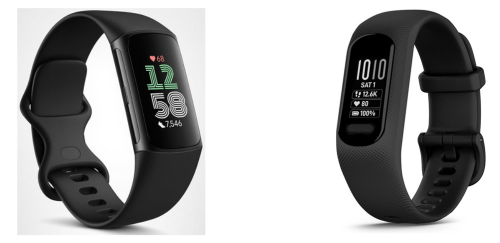
Why Do I Recommend The Fitbit Charge 6

  • The Fitbit Charge 6 comes with built-in GPS to record outdoor runs and walks with accurate pace and distance data without carrying a phone, while the Garmin vívosmart 5 uses phone-connected GPS.
  • Fitbit Charge 6 includes Google Maps turn-by-turn navigation for real-time route guidance during outdoor activities, whereas the Garmin vívosmart 5 lacks on-device navigation support.
  • It features an AMOLED color touchscreen for clearer visibility and easier interaction in bright outdoor conditions, while the Garmin vívosmart 5 uses a monochrome OLED display.
  • The Fitbit Charge 6 includes an ECG app to detect signs of irregular heart rhythms for deeper heart health monitoring, whereas the Garmin vívosmart 5 does not include ECG functionality.
  • Fitbit Charge 6 comes with an EDA stress sensor to measure physical stress responses for guided stress management sessions, while the Garmin vívosmart 5 relies only on heart rate variability metrics.
  • It supports NFC payments through Google Wallet to allow quick contactless payments directly from the wrist, while the Garmin vívosmart 5 has no payment functionality.
  • The Fitbit Charge 6 supports heart rate broadcast mode to share live heart rate data with compatible fitness equipment and apps, whereas the Garmin vívosmart 5 does not support heart rate broadcasting.
  • Fitbit Charge 6 features a larger display area to show more workout data and notifications at once for easier readability, while the Garmin vívosmart 5 uses a smaller screen with limited on-screen data.

Maybe the Garmin vívosmart 5 price can make you comfortable because it’s a little bit cheaper than the Fitbit Charge 6. But you have to compromise all the above-mentioned features. Now the Decision is Yours. I hope it was helpful to choose the right one.

Side By Side Comparison

FeatureFitbit Charge 6Garmin vívosmart 5
Display typeAMOLEDOLED
Display sizeLargerSmaller
Physical buttonYesNo
On-device GPSYesNo
NFC paymentsYesNo
Wallet platformGoogle WalletNone
Maps supportGoogle MapsNo
Music service controlYouTube MusicNo
App ecosystemFitbit appsNone
ECGYesNo
EDA sensorYesNo
Skin temperature (night)YesNo
Heart rate broadcastYesNo
Readiness metricDaily Readiness ScoreBody Battery
Training load focusCardio LoadBody Battery/Stress-based
Coaching platformFitbit PremiumGarmin Coach
Data platformFitbit appGarmin Connect
Subscription dependencyHigherLower
Incident detectionLimitedYes
Watch face styleColor facesSimple faces
PriceCheck Charge 6 PriceCheck vívosmart 5 Price

What Common Both Can Do?

  • Fitness band form factor: Both devices use a slim, lightweight fitness band design that prioritizes comfort and all-day wear. This makes them suitable for continuous health tracking without feeling bulky on the wrist.
  • Touchscreen display: Each model features a touchscreen interface that allows users to swipe, tap, and navigate menus directly on the device. This simplifies interaction compared to button-only trackers.
  • Heart rate monitoring: Both devices continuously measure heart rate using optical sensors. This data forms the foundation for fitness tracking, calorie estimates, and health insights.
  • 24/7 heart rate tracking: Each tracker monitors heart rate throughout the day and night. Continuous tracking helps identify resting heart rate trends and overall cardiovascular changes.
  • Step counting: Both devices track daily steps automatically. This allows users to monitor basic activity levels and progress toward movement goals.
  • Distance tracking: Each model estimates distance covered during walks, runs, and daily movement. This helps users better understand activity volume beyond just step counts.
  • Calorie tracking: Both devices estimate calories burned based on activity, heart rate, and personal data. This is useful for users managing weight or energy balance.
  • Sleep tracking: Each tracker monitors sleep duration automatically when worn overnight. This helps users understand overall sleep quantity and consistency.
  • Sleep stages: Both devices break sleep into stages such as light, deep, and REM sleep. Stage data provides deeper insight into sleep quality rather than just total hours.
  • SpO₂ tracking: Each model measures blood oxygen saturation, primarily during sleep. This metric can highlight changes in breathing patterns and overall wellness trends.
  • Stress tracking: Both devices include stress-related metrics derived from heart rate variability and activity data. This helps users recognize periods of physical or mental strain.
  • Breathing rate tracking: Each tracker measures average breathing rate, especially during sleep. Changes in this metric can indicate shifts in recovery or health status.
  • Smart notifications: Both devices display notifications from a connected smartphone, such as calls, texts, and app alerts. This allows users to stay informed without checking their phone constantly.
  • Smartphone connectivity: Each model connects to a smartphone via Bluetooth. This connection enables data syncing, notifications, and device configuration through companion apps.
  • Water resistance: Both devices are rated at 5 ATM for water resistance. This makes them suitable for swimming, showering, and general water exposure.
  • Rechargeable battery: Each tracker uses a built-in rechargeable battery. This eliminates the need for disposable batteries and supports regular daily use.
  • Workout/activity profiles: Both devices support multiple activity or exercise modes. These profiles allow workouts to be categorized and tracked more accurately.
  • Alarm and timer: Each model includes basic alarm and timer functions. These features add everyday utility beyond fitness and health tracking.

Common Features

FeatureFitbit Charge 6Garmin vívosmart 5
Fitness band form factorYesYes
Touchscreen displayYesYes
Heart rate monitoringYesYes
24/7 heart rate trackingYesYes
Step countingYesYes
Distance trackingYesYes
Calorie trackingYesYes
Sleep trackingYesYes
Sleep stagesYesYes
SpO₂ trackingYesYes
Stress trackingYesYes
Breathing rate trackingYesYes
Smart notificationsYesYes
Smartphone connectivityBluetoothBluetooth
Water resistance5 ATM5 ATM
Rechargeable batteryYesYes
Workout/activity profilesYesYes
Alarm and timerYesYes
Price Check Charge 6 Price Check vívosmart 5 Price

FAQ

Is Fitbit Charge 6 compatible with both Android and iOS?
Fitbit Charge 6 works with both Android and iOS devices through the Fitbit app, allowing users to sync health data, receive notifications, and manage settings regardless of smartphone platform.

Is Garmin vívosmart 5 compatible with both Android and iOS?
Garmin vívosmart 5 supports both Android and iOS via Garmin Connect, enabling full access to activity tracking, health metrics, and notifications on either operating system.

Do both devices support continuous heart rate tracking?
Yes, both Fitbit Charge 6 and Garmin vívosmart 5 provide 24/7 optical heart rate monitoring to track resting heart rate, activity intensity, and daily heart rate trends.

Can both trackers monitor sleep automatically?
Both devices automatically detect and track sleep, including total sleep time and sleep stages, without requiring manual activation before going to bed.

Do both devices measure blood oxygen levels (SpO₂)?
Yes, both trackers support SpO₂ monitoring, primarily during sleep, to provide insight into overnight oxygen saturation trends.

Are the devices suitable for swimming and water activities?
Both Fitbit Charge 6 and Garmin vívosmart 5 are rated at 5 ATM water resistance, making them suitable for swimming, showering, and water-based workouts.

Do both devices provide stress tracking features?
Yes, both devices track stress using heart rate variability and related metrics, helping users understand daily stress patterns and recovery status.

Can both trackers display smartphone notifications?
Both devices can show call, text, and app notifications from a connected smartphone, allowing users to stay updated without checking their phone.

Do both devices require a smartphone for setup and data syncing?
Yes, initial setup and ongoing data synchronization for both trackers require a compatible smartphone and their respective companion apps.

Do both devices track daily activity metrics like steps and calories?
Both trackers record steps, distance, and estimated calories burned throughout the day, providing core activity tracking for everyday fitness monitoring.

Are workout or activity modes available on both devices?
Yes, both Fitbit Charge 6 and Garmin vívosmart 5 include multiple activity or exercise profiles to categorize workouts such as walking, running, or cardio sessions.

Do both devices support breathing rate tracking?
Both trackers measure breathing rate, particularly during sleep, offering additional insight into recovery and overall wellness trends.

Do both devices use rechargeable batteries?
Yes, both Fitbit Charge 6 and Garmin vívosmart 5 feature built-in rechargeable batteries designed for multi-day use between charges.

Can both devices track health data continuously throughout the day?
Both trackers are designed for all-day wear, continuously collecting health and activity data such as heart rate, movement, and stress levels.

Do both devices rely on companion apps for detailed insights?
Yes, detailed analysis, long-term trends, and personalized insights for both devices are accessed through their respective companion apps, Fitbit app and Garmin Connect.

Quick Deal Access
Scroll to Top